This post provides brief descriptions of the various alternative and extended range violin family instruments made by D. Rickert Musical Instruments. The descriptions include the normal tuning for each instrument, as well as links to other reference material about each instrument. There are two related posts:
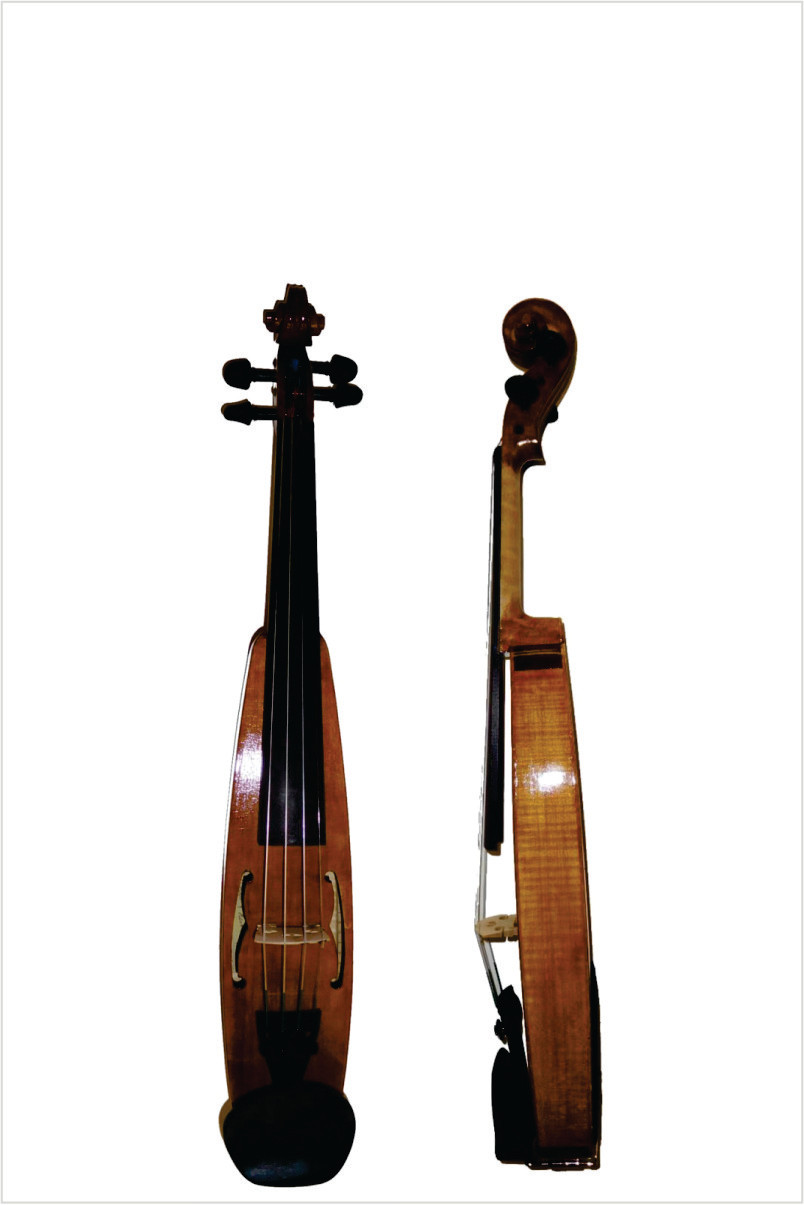
A travel violin, also known as a “backpacker fiddle” or “modern pochette,” is a specially designed, full-length violin (4/4) with a narrower body for easy portability and durability, often for travelers and adventurers.
A 5-string violin is a variant of the standard 4-string violin with an added string, typically a lower C string, extending its range and allowing players to access notes lower than the standard violin’s range.
Octave Violin (aka Baritone Violin or Modern Tenor Violin)
An octave violin, also sometimes called a baritone violin or tenor violin, is a violin-sized instrument tuned an octave lower than a standard violin, typically using larger diameter strings and a larger body or deeper ribs to accommodate the lower frequencies.
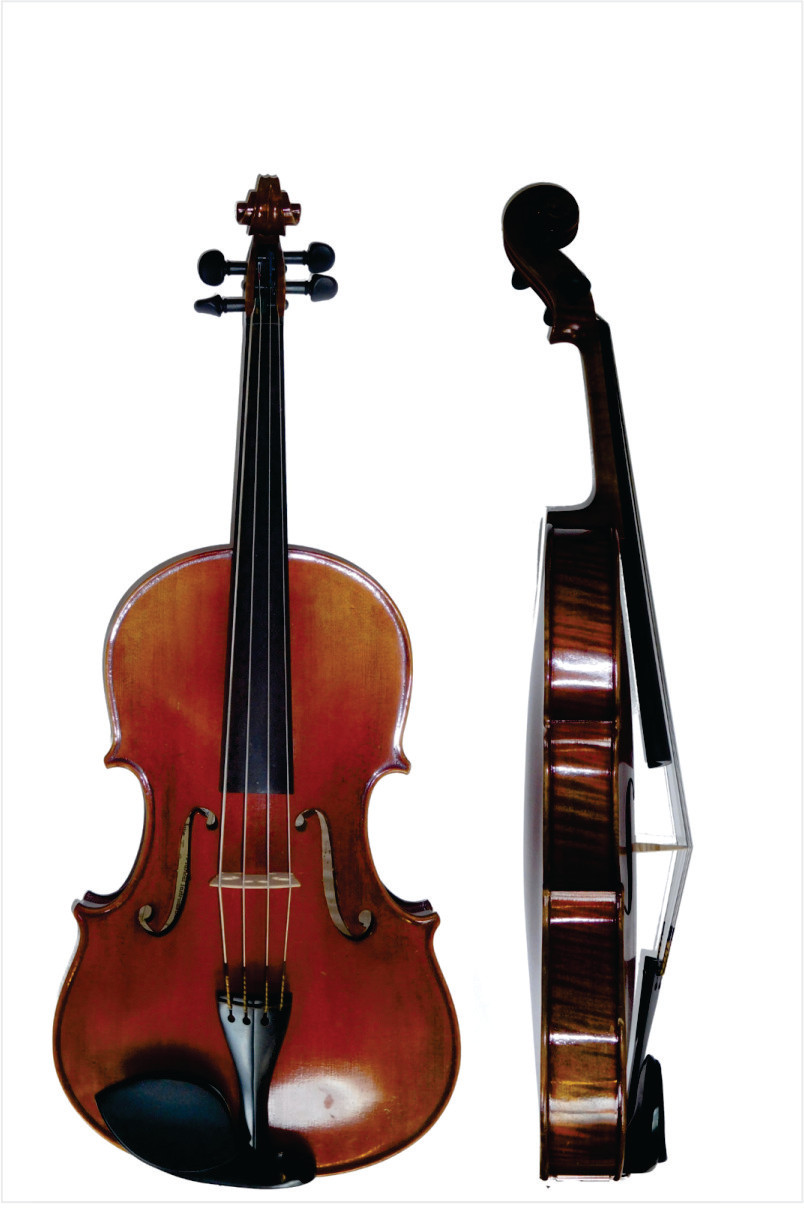
A travel viola is a viola designed or adapted for convenient transport, often with features like a smaller size, lightweight case, or detachable parts, allowing for easy carrying and storage while traveling.
A 5-string viola is a viola with an added high E string, extending its range and tonal possibilities, while maintaining the familiar viola tuning of C, G, D, and A.
A “tenor viola,” also sometimes called a tenor violin, is a larger, lower-tuned version of the viola, typically with a body size similar to a smaller viola (around 15.5 to 16 inches) and strings tuned to an octave lower than a regular viola (like an octave violin).
Note: While historically, “tenor viola” referred to larger violas, today it’s more commonly understood as a normal viola-sized instrument tuned an octave lower, much like an octave violin.
An octave viola, also sometimes called a baritone viola or “chin cello,” is a viola tuned an octave lower than a standard viola, effectively matching the tuning of a cello (C, G, D, A).
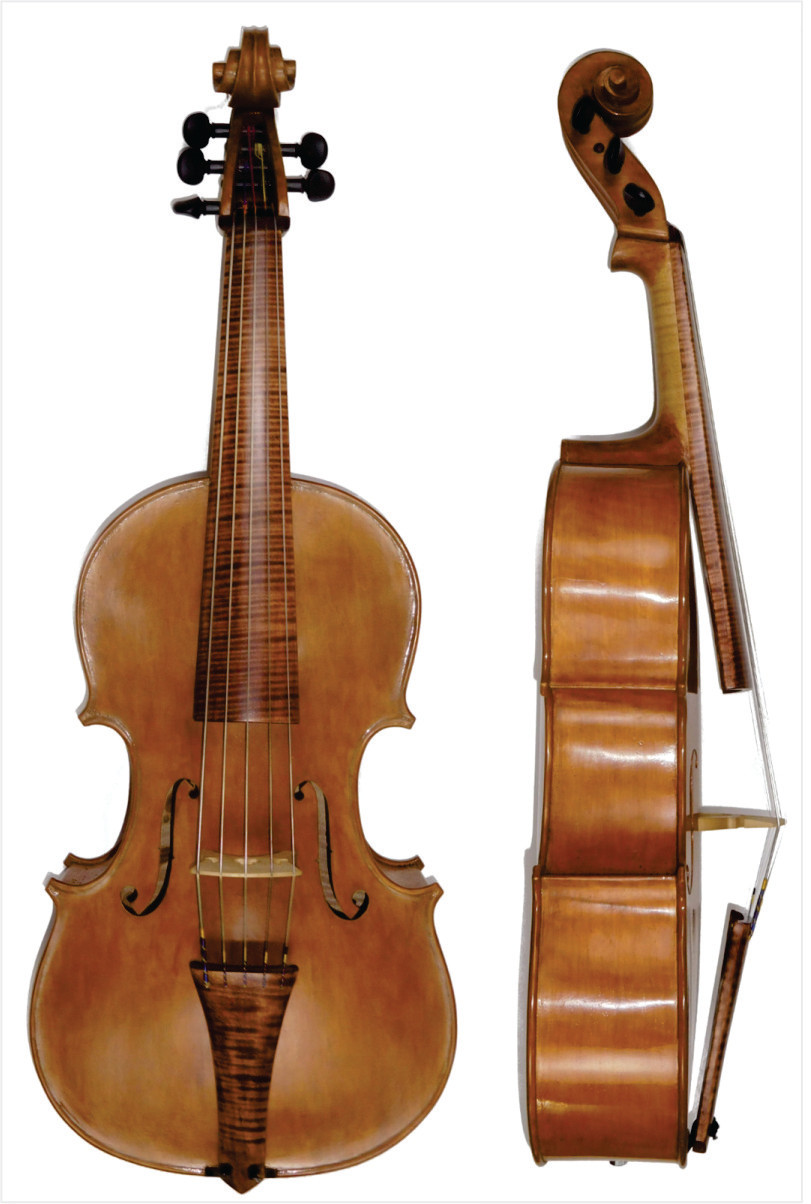
The “violoncello da spalla,” or “cello da spalla,” is a small, five-string cello played across the chest, similar to a viola or violin, and held by a shoulder strap, popular with Baroque period enthusiasts.
A “Petite Violoncello da Spalla” is a smaller version of a violoncello da spalla. It typically has a 16.5” body with very deep ribs. In this configuration, it is usually tuned like a normal violoncello da spalla, which is C2 G2 D3 A3 E4. It is also available with a body as small as 15″, which is just a bit larger than a violin. While having a very small plan profile, the ribs, however, are 80mm (3 inches). In other words, cello rather than violin proportions The standard tuning for the smaller model is an octave lower than a regular violin, with an additional B-string on the treble side (G2 D3 A3 E4 B4). Without changing the strings, it can also be tuned down to F2 C3 G3 D4 A4; that is, a viola with an additional F-string on the low end.
Common tunings: C2 G2 D3 A3 E4, G2 D3 A3 E4 B4 or F2 C3 G3 D4 A4








 D Rickert Musical Instruments
Leave a comment