
 Please visit the Don Rickert Musician Shop.
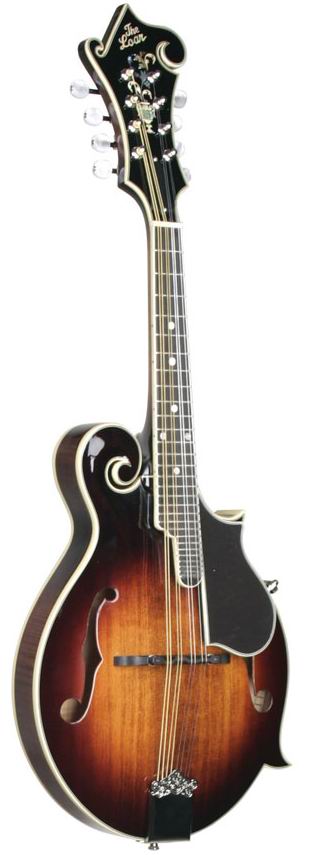
Have you ever seen a Bluegrass mandolin player playing anything but an F-Type or a Celtic player ever playing an F-Type (the photo with the scroll on the left). There are reasons. Read on…
Musicians in just about every genre except Bluegrass, including Old-Time (lots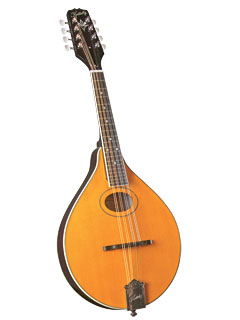 of F-Styles and A-Styles are used in Old-Time as well) favor “flatiron” or “pancake” type mandolins. “Pancake”-type mandolins, such as those made by Weber and the Flat-Top Flatiron-Style Mandolin by Don Rickert Design (now Don Rickert Lutherie) and sold through Adventurous Muse stores, are particularly suited for more traditional forms of music than Bluegrass.
“Pancake” mandolins are particularly well-suited and popular Celtic music, especially Irish. In fact, Flatirons and similar mandolins are often called “Celtic Mandolins” or Irish Mandolins.
The “pancake” mandolin sound is not the dominating, cut-through sound 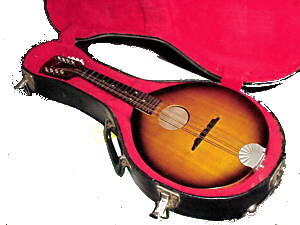 desired by Bill Monroe, as he was trying to do no less than supplant the dominance of the fiddle as the lead melody instrument. Lloyd Loar, then with Gibson, designed that instrument Bill Monroe was looking for, which we now call the "F-type" body style.
Monroe was a fretted instrument player through and through, in fact, a jazz guitarist, before re-inventing himself as the archetype of the Bluegrass mandolin player (With a different musical background, he may have been a fiddler). Thousands of players after him, to this day, strive to master Monroe’s jazz-infused mandolin style, the best of them evolving their own style as they develop as players.
In other “folk” genres, including Old-Time as well as Irish and Scottish, the important job of the mandolin is presence and depth. The universal melody instrument is the fiddle. In the case of Celtic music, the melody instruments can also be the whistle, accordion, tenor banjo, flute or pipes; generally not the mandolin, despite its importance in the overall mix.


Leave a comment